
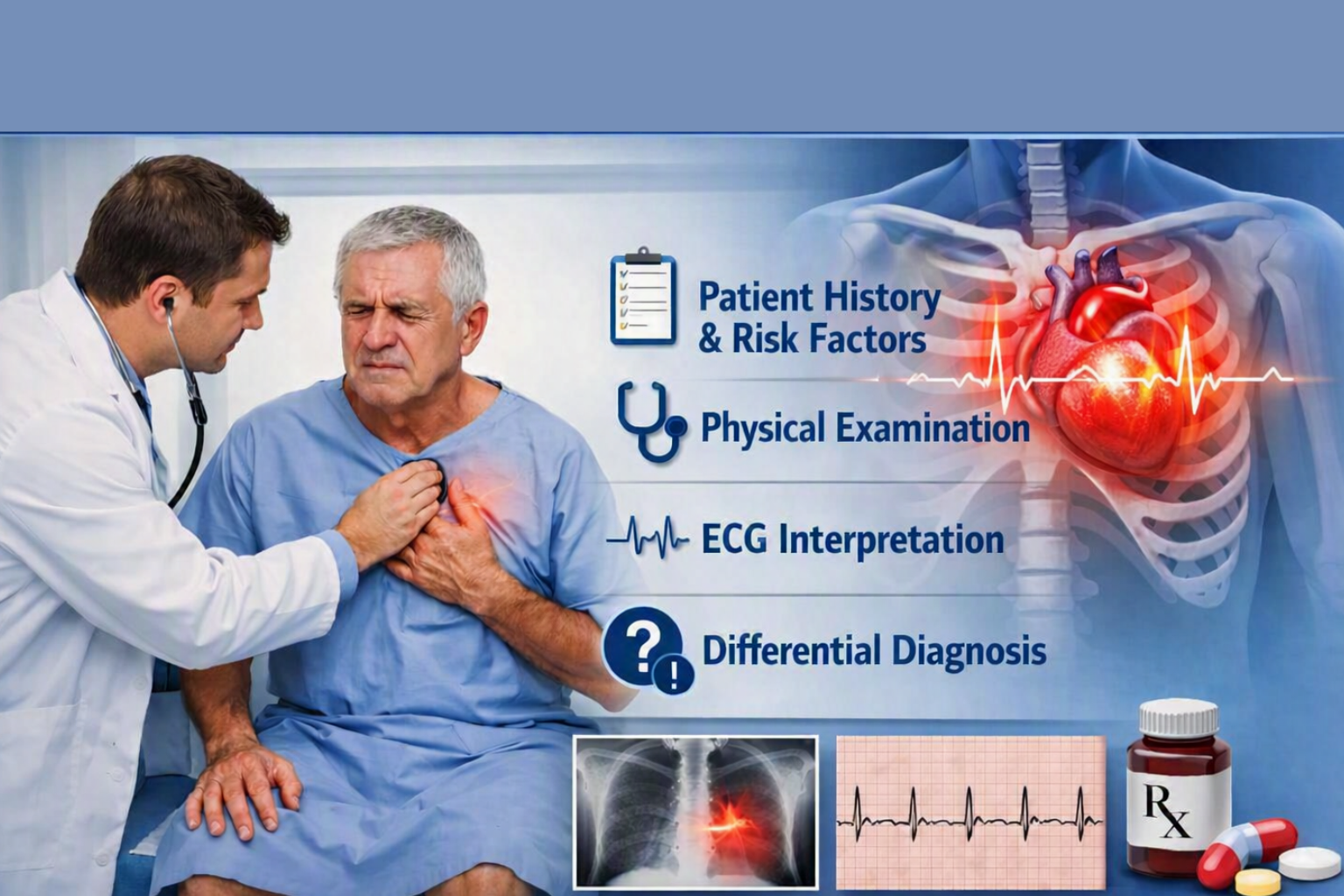
Assessment of patient presenting with Chest Pain
Live Webinar | 3 hours CPD
Who is this course for: Ideal for GPs, nurses, HCSWs and allied health professionals involved in acute assessment and frontline triage.
Assessment of Chest Pain in Primary Care – Red Flag Recognition and Safe Decision‑Making
Chest pain remains one of the most challenging and high‑risk presentations in primary care. This focused clinical training session supports clinicians who want stronger confidence and clearer decision‑making when assessing patients with chest pain. Moreover, the course provides a structured, evidence‑based approach, helping delegates recognise different types of chest pain, understand key clinical features and apply safe management strategies.
Additionally, the session explores basic underlying pathophysiology, allowing clinicians to understand why symptoms vary across cardiac, respiratory, gastrointestinal and musculoskeletal causes. Delegates learn how to take a structured history, interpret presenting symptoms and identify red flags that require urgent escalation. Consequently, participants gain clearer insight into when reassurance is appropriate and when immediate referral is essential.
Throughout the course, delegates review treatment options suitable for primary care. Furthermore, the session highlights safety‑netting, review mechanisms and clear communication strategies that support patient understanding and reduce clinical risk. Practical case studies help clinicians apply learning to real‑world scenarios, strengthening pattern recognition and improving confidence during acute assessments.
A quick‑fire Q&A segment encourages discussion and allows delegates to consolidate key concepts. As a result, participants leave with improved clarity, stronger assessment skills and a deeper understanding of safe chest pain management in primary care.
This training supports accurate triage, early recognition of serious illness and consistent, evidence‑based care across frontline services.
Learning Outcomes
By the end of the session, delegates will understand:
- Different types of chest pain and how they present
- Structured history‑taking and clinical assessment
- Basic underlying pathophysiology
- Treatment options in primary care
- Red flag features requiring urgent escalation
- Safety‑netting and review mechanisms
- Case‑based decision‑making
- Key concepts reinforced through Q&A