Consent in Vaccinations
Understanding Informed Consent and Consent to Proceed in Vaccination: Legal, Professional, and Practical Implications
Introduction
Consent is a cornerstone of ethical, legal and safe clinical practice — especially in vaccination. However, confusion between informed consent and consent to proceed is common. This misunderstanding can compromise patient safety, professional accountability and organisational governance. Therefore, for healthcare professionals and managers overseeing vaccination services, understanding the distinction is essential.
Legal and Ethical Frameworks
Consent in vaccination is shaped by several UK legal and professional frameworks. Together, these frameworks create the foundation for safe, lawful vaccine delivery.
- UKHSA Green Book – national guidance on immunisation and consent
- Human Medicines Regulations 2012 – legal requirements for vaccine supply and administration
- GMC & NMC Standards – professional expectations for consent, communication and accountability
Consequently, these frameworks define what constitutes valid consent and clarify the responsibilities of those delivering vaccines.
What is Informed Consent?
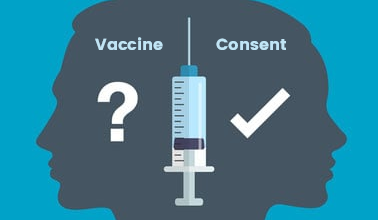
Informed consent is a dialogue, not a tick‑box exercise. Moreover, it requires meaningful communication and shared understanding.
It involves:
- Clear, relevant information about the vaccine
- Explanation of benefits, risks and alternatives
- Confirmation that the patient understands
- A voluntary decision, free from pressure
Therefore, informed consent must be obtained and documented before vaccination. This protects patient autonomy and provides essential clinical governance assurance.
What is Consent to Proceed?
Consent to proceed is the patient’s agreement at the point of administration. Additionally, it acts as a final operational check that the patient still wishes to receive the vaccine.
However, it does not replace informed consent. Consent to proceed is only valid if informed consent has already been obtained.
Delegation and Legal Mechanisms: PSDs, PGDs, VGDs
Vaccination can be delivered under different legal mechanisms:
- Patient Specific Directions (PSDs) – written instructions for named patients
- Patient Group Directions (PGDs) – allow authorised staff to supply/administer vaccines to groups
- Vaccine Group Directions (VGDs) – emerging models for streamlined group vaccination
Regardless of mechanism, the practitioner administering the vaccine remains responsible for ensuring consent is valid, understood and documented. Consequently, delegation introduces risk if roles, responsibilities and processes are unclear.
Role of Non-Registered Vaccinators
Non‑registered vaccinators (e.g., HCSWs) may administer vaccines under supervision or delegation. Therefore, they must be:
- Competent
- Appropriately trained
- Supported by robust governance
Furthermore, supervising clinicians must ensure non‑registered staff understand the difference between informed consent and consent to proceed — and follow correct processes.
Practical Implications: Governance and Risk Reduction
Strong governance reduces risk and improves safety. As a result, organisations should:
- Provide clear consent protocols
- Offer regular training and competency assessment
- Audit documentation and consent processes
- Use templates, checklists and supervision
- Ensure informed consent is obtained before vaccination
- Confirm consent to proceed at the point of administration
Additionally, adhering to UKHSA guidance and the Human Medicines Regulations is essential for compliance.
Conclusion
Understanding the difference between informed consent and consent to proceed is fundamental to safe, effective vaccination practice. Moreover, clear processes, strong governance, appropriate delegation and ongoing training ensure consent is properly obtained, documented and respected. By strengthening systems and clarifying roles, organisations can reduce risk, protect staff and uphold high standards in an evolving vaccination landscape.